If you’ve spent some time exploring the forex markets—or if you’re just beginning your trading journey—you may have noticed many brokers highlighting”zero spreads”or”ultra-low cost” in their messaging. It’s completely natural to wonder: What does that really mean? And why does it matter so much to me as a trader?
Today, we’d love to walk you through the concept of the forex spread in a clear, friendly, and practical way. W’ll explain what it is (and why it quietly but powerfully shapes your trading experience), why keeping an eye on spreads supports your long-term confidence and profitability, and—most importantly—which brokers consistently offer fair, transparent, and genuinely competitive spreads. Let’s explore together!
What Exactly is a Forex Spread?
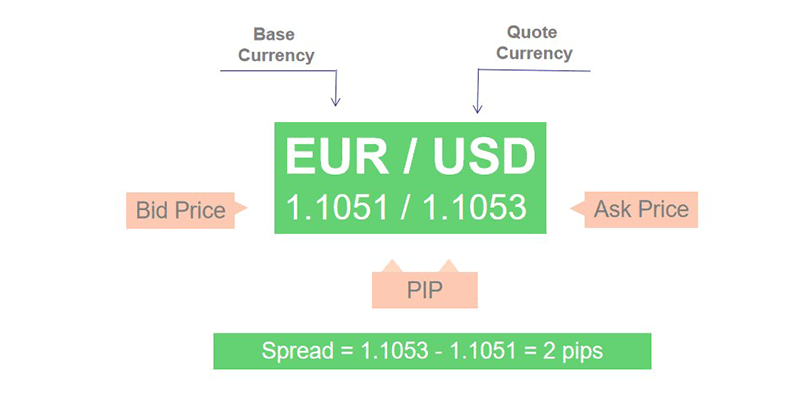
In the simplest terms, the spread is the primary way your broker makes money. It is the difference between the price at which you can buy a currency pair and the price at which you can sell it at any given moment.
When you open your trading platform, you’ll always see two prices for every pair:
- The Bid Price: The price the market will pay you to sell.
- The Ask Price: The price you must pay to buy from the market.
Mathematically, the spread is calculated as:
Spread=Ask−Bid
For example, let’s say you are looking at the EUR/USD.
- Bid Price: 1.0500
- Ask Price: 1.0502
Here, the difference is 0.0002, which translates to a spread of 2 pips. Whenever you enter a trade, you are immediately down by the amount of the spread. You need the market to move in your favor by at least 2 pips just to break even!
Types of Spreads
1.Fixed Spread
Stays constant regardless of market conditions
Usually offered by market maker brokers
Easier for beginners to predict costs
2. Variable (Floating) Spread
Changes based on market liquidity and volatility
Can be extremely low during active sessions
Common in ECN/STP brokers
Why Do Low Spreads Matter So Much?
You might think, “It’s just a pip or two, who cares?” But over time, those pips compound into massive amounts of money. Here is why hunting for the lowest possible spread is crucial:
1. It Directly Impacts Your Win Rate and Profitability
Imagine you are a day trader aiming for a quick 10-pip profit per trade.
If your broker charges a 2-pip spread, you actually need the market to move 12 pips in your favor. Furthermore, you are giving up 20% of your potential profit right out of the gate.
To visualize your true trading costs, consider this equation:
Total Cost=(Spread×Pip Value)+Commission
Net Profit=Gross Profit−Total Cost
The tighter the spread, the faster your trades move into profitable territory.
2. Scalpers and EA Traders Demand It
If your trading strategy involves high-frequency trading, scalping (aiming for small gains of 3–5 pips per trade), or using automated Expert Advisors (EAs), you’ll find that even a slightly wider spread can significantly impact your performance. Many strategies that appear highly profitable in backtesting may underperform in live markets—not due to flaws in the logic, but because real-world spreads are often wider than those assumed in testing.
But “Low Spread” Isn’t Everything,Here’s where many traders get misled.
Some brokers advertise:
“0.0 pip spreads”
But:
They charge commissions per trade
Or spreads widen during news events
Or execution quality is poor (slippage)
The real metric to watch is:Total trading cost = spread + commission + execution quality
Top Low-Spread forex Broker Recommendations
| Forex Brokers | Founded | Min Account | Min Contract | Account Type | Regulation |
|---|---|---|---|---|---|
|
2007
|
$200
|
0.01
|
Raw Spread,Trader Raw
|
ASIC (Australia), CySEC (Cyprus), FSA (Seychelles)
|
|
|
2006
|
$100
|
0.01
|
mt4/mt5 Raw,Trader Raw
|
CySEC (Cyprus), FCA (UK), FSCA (South Africa), SCB (Bahamas)
|
|
|
2009
|
$5
|
0.001
|
Ultra Low
|
CySEC (Cyprus), ASIC (Australia), FCA (UK)
|
|
|
2008
|
$1
|
0.001
|
Pro,Zero,Raw Spread
|
CySEC (Cyprus), FCA (United Kingdom), FSCA (South Africa), FSA (Seychelles), FSC (British Virgin Islands), CMA (Kenya)
|
|
|
2014
|
$100
|
0.01
|
RAW ACCOUNT
|
FCA (United Kingdom), FSA (Seychelles), DFSA (UAE), CySEC (Cyprus), FSA (Lubuan), FSCA(South Africa)
|
|
|
2007
|
$5
|
0.01
|
all
|
ASIC (Australia), FCA (UK), DFSA (Dubai), FMA (New Zealand)
|
|
|
2010
|
$50
|
0.01
|
Razor
|
ASIC (Australia), FCA (UK), CySEC(Cyprus), BaFIN (Germany), DFSA (United Arab Emirates), SCB (Bahamas), CMA (Kenya)
|
 icmarkets.com
 fxpro.com
 XM.com
 EXNESS.com
 tickmill.com
 AXI.com
 pepperstone.com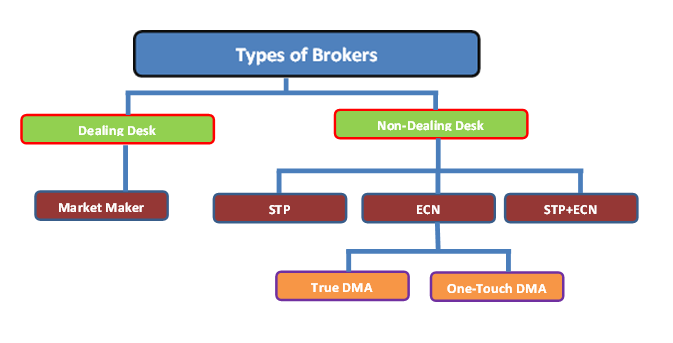
评论0